
Det Faglige Hus

CA

Krifa

ASE

Min A-kasse
Lederne

HK
Frie
FOA
Business Danmark

Magistrenes A-kasse

3F

Lærernes A-kasse

Din Sundhedsfaglige A-kasse
Din Faglige A-kasse
Akademikernes A-kasse
AJKS a-kasse
Socialpædagogernes
BUPL
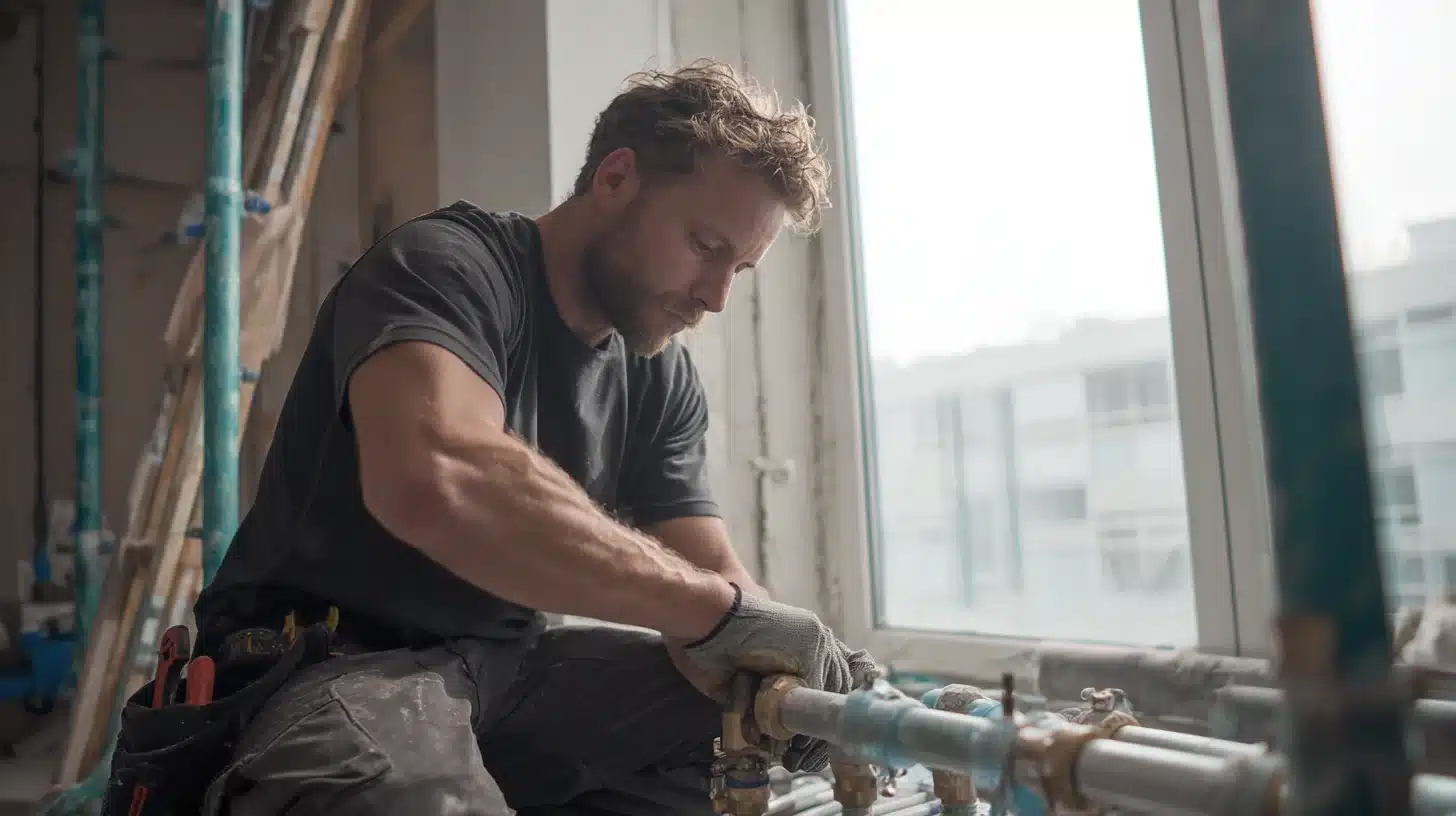
The Blik og Rør union is a specialized Danish trade union representing workers in the plumbing, pipefitting, tinsmithing, and chimney sweeping industries. It negotiates wages, ensures safe working conditions, and provides legal support for its members.
Foreign workers moving to Denmark to work in these specific trades will find that this organization is the primary body representing their professional interests. It operates under the umbrella of the Danish Trade Union Confederation (FH).
Joining this specific union ensures that your employer adheres to the agreed-upon industry standards. It is highly relevant for expats who want to secure their labor rights in the Danish construction and installation sectors.
A-kasse vs. Fagforening: Understanding the Difference
Many foreign workers confuse the roles of a trade union and an unemployment fund. It is vital to understand what is a fagforening (trade union) versus an A-kasse (unemployment insurance fund).
Blik & Rør is a trade union. A trade union handles your working conditions, salary negotiations, workplace safety, and legal disputes with your employer. They do not pay out unemployment benefits if you lose your job.
To receive unemployment benefits, you must separately understand what is an a-kasse and join one. Most members of Blik & Rør choose to join an affiliated A-kasse, such as Byggefagenes A-kasse or 3F, to ensure full financial protection.
You can be a member of a trade union without being in an A-kasse, and vice versa. However, the Danish labor market system is designed so that workers typically hold memberships in both organizations simultaneously.
Target Audience: Who Should Join Blik & Rør?
Blik & Rør is a highly specialized organization. It does not accept members from all professions. You should only join this union if you work within its specific target industries.
The primary target audience includes:
- Plumbers and heating installers (VVS-montører).
- Pipefitters and industrial pipe workers (rørlæggere).
- Tinsmiths and sheet metal workers (blikkenslagere).
- Chimney sweeps (skorstensfejere).
- Apprentices training in any of the above trades.
If you work as an electrician, carpenter, or general construction worker, you belong in a different union. Choosing the correct union is crucial because only the union specialized in your trade has the legal right to negotiate your specific collective agreement.
Rules for Apprentices and Students
Denmark has a strong tradition of vocational education (erhvervsuddannelse). If you are moving to Denmark to train as a plumber or chimney sweep, you will likely enter an apprenticeship (lærlingeuddannelse).
During your apprenticeship, you alternate between classroom learning and working for a company. You are entitled to an apprentice wage Denmark (lærlingeløn) during both the school periods and the practical work periods.
Blik & Rør closely monitors companies that hire apprentices. They ensure that employers provide proper training and pay the correct apprentice wage, which increases annually as you progress through your education.
Apprentices are highly encouraged to join the union. Because the membership is usually free for students in vocational training, there is no financial barrier to securing professional protection early in your career.
The Danish Model and Collective Agreements
The Danish labor market operates on a unique system known as The Danish Model (Den Danske Model). Unlike many other countries, Denmark has very few strict national labor laws governing wages and working hours.
Instead, these conditions are determined by a Collective Agreement (Overenskomst). This is a legally binding contract negotiated between trade unions like Blik & Rør and employer associations.
Because there is no statutory minimum wage in Denmark, your minimum pay is dictated entirely by the collective agreement covering your specific trade. If your employer does not follow an overenskomst, you have very little legal protection regarding your salary.
The Danish Model also dictates notice periods, overtime pay, and pension contributions. When you join Blik & Rør, you support the organization that negotiates these exact terms for all plumbers and pipefitters in the country.
What Happens During a Strike?
Strikes and lockouts are fundamental tools in the Danish Model. Every few years, the collective agreements expire and must be renegotiated. If Blik & Rør and the employer associations cannot reach an agreement, a conflict may occur.
A strike (strejke) is when the workers refuse to work to pressure the employers. A lockout is when employers refuse to let the workers enter the workplace to pressure the union. Both actions are entirely legal under Danish labor law during negotiation periods.
During a legal strike or lockout, you will not receive your normal salary from your employer. Instead, if you are a member of Blik & Rør, the union will pay you a strike benefit (konfliktunderstøttelse) to cover your living expenses.
If you are not a member of the union during a conflict, you are still legally barred from working if your workplace is locked out, but you will receive no financial compensation. This is a major reason why union membership is highly recommended in Denmark.
Membership Prices, Fees, and Discounts
Union membership in Denmark requires a monthly fee. The exact price for joining Blik & Rør depends on your local branch, as the union is divided into regional departments across Denmark.
On average, a fully qualified worker can expect to pay between 500 and 600 DKK per month for the trade union membership. This fee does not include the cost of an A-kasse, which must be paid separately.
Union fees in Denmark are tax-deductible. The Danish tax authority (SKAT) automatically applies this deduction to your annual tax return, meaning the actual out-of-pocket cost is significantly lower than the stated monthly fee.
Blik & Rør offers substantial discounts for specific groups. Apprentices and students in the relevant vocational training programs often receive free or heavily discounted memberships.
Core Benefits and Services
Joining Blik & Rør provides a wide range of practical and legal benefits. The union acts as your safety net against unfair treatment, wage theft, and unsafe working environments.
Core services include:
- Wage checks: The union will review your payslips to ensure you receive the correct hourly rate, overtime pay, and pension contributions.
- Legal representation: If you are wrongfully terminated or injured on the job, the union provides free legal counsel and representation in court.
- Workplace safety: The union employs safety representatives who inspect work sites to ensure compliance with Danish health and safety regulations.
- Professional development: Members gain access to specialized courses and training to upgrade their skills within the plumbing and pipefitting trades.
For foreign workers, the wage check service is particularly valuable. Expats are often targeted by unscrupulous employers who underpay them or withhold mandatory allowances. The union ensures you are paid exactly what your Danish colleagues earn.
Working Conditions and Workplace Safety
The plumbing and pipefitting industries involve physically demanding work and exposure to hazardous materials. Blik & Rør places a massive emphasis on workplace safety to protect its members from long-term injuries.
Danish law requires employers to provide necessary safety equipment, including specialized workwear, protective footwear, and respiratory masks when working with dangerous chemicals or dust. The union strictly enforces these regulations.
If a workplace is deemed unsafe, union members have the right to halt work until the issue is resolved. Blik & Rør provides immediate legal backing to workers who refuse to operate in dangerous conditions, ensuring they are not fired for prioritizing their health.
For foreign workers, understanding these safety rights is crucial. Expats are statistically more likely to suffer workplace injuries because they may not be fully informed about Danish safety standards or feel pressured to complete tasks quickly.
The Role of the Union Representative
In the Danish labor market, the union representative is known as a “Tillidsrepræsentant” (TR). This person is a regular employee elected by their colleagues to act as the official link between the workers, the management, and the union.
If your workplace has a collective agreement, you will likely have a Tillidsrepræsentant on site. This representative is your first point of contact if you experience issues with your salary, working hours, or management behavior.
The Tillidsrepræsentant enjoys special protection under Danish labor law. They cannot be easily fired by the employer, which allows them to negotiate aggressively on behalf of their colleagues without fear of retaliation.
Foreign workers should identify their Tillidsrepræsentant on their first day of work. Even if you are not yet fluent in Danish, this representative is obligated to assist you and ensure your rights are upheld according to the collective agreement.
Danish Terminology: Essential Labor Market Words
Understanding the Danish labor market requires familiarizing yourself with specific local terminology. The following table breaks down the most important concepts you will encounter.
| Danish Term | English Translation | Brief Explanation |
|---|---|---|
| Overenskomst | Collective Agreement | A negotiated contract between unions and employers dictating wages, working hours, and rights. |
| Dagpenge | Unemployment Benefits | Financial support paid by an A-kasse when you lose your job, subject to strict eligibility rules. |
| Feriepenge | Holiday Allowance | A mandatory 12.5% addition to your salary, saved up to be paid out when you take vacation days. |
| AM-bidrag | Labor Market Contribution | A mandatory 8% tax deducted from all gross income in Denmark to fund state welfare and labor programs. |
| Funktionærloven | Salaried Employees Act | A law protecting white-collar workers. Plumbers are usually blue-collar and covered by collective agreements instead. |
These terms form the foundation of your rights and obligations in Denmark. For example, understanding what is dagpenge is crucial for your financial security. Dagpenge is the state-regulated unemployment benefit system, but it is administered by private A-kasser, not the government.
Similarly, feriepenge (holiday pay) is a complex system for foreigners. Instead of getting paid directly while on leave, your employer pays 12.5% of your wages into a central system (FerieKonto), which you then request to be paid out when you take actual time off.
Explaining Complex Labor Laws for Expats
Foreign workers in the construction and installation sectors often face confusion regarding specific Danish labor laws. It is important to know how these laws apply to blue-collar trades like plumbing.
The Salaried Employees Act (Funktionærloven) provides strict rules for notice periods and severance pay. However, this law primarily applies to office workers and managers. As a plumber or pipefitter, you are generally considered a blue-collar worker (timelønnet), meaning Funktionærloven does not apply to you.
Instead, your notice periods and rights are dictated entirely by your collective agreement. This makes union membership even more critical, as you do not have the baseline protections of Funktionærloven to fall back on.
Another vital concept is the AM-bidrag (Arbejdsmarkedsbidrag). This is an 8% labor market contribution tax. It is deducted from your gross salary before any other income taxes are calculated. Every working individual in Denmark must pay this, regardless of their union affiliation.
Common Misconceptions and Pitfalls
Many expats assume that the Danish state will intervene if an employer treats them unfairly. This is a major misconception. The Danish authorities rarely interfere in wage disputes or unfair dismissals.
It is entirely up to the trade unions to enforce labor rights. If you are not a member of Blik & Rør, and your employer refuses to pay your overtime or holiday allowance, you will have to hire a private lawyer at your own expense.
Another common pitfall involves the recognition of foreign qualifications. Denmark has strict regulations for authorized trades, especially regarding gas, water, and sanitation installations.
You cannot legally work as an authorized plumber in Denmark without having your foreign educational certificates approved by the Danish Safety Technology Authority (Sikkerhedsstyrelsen). Blik & Rør can guide foreign workers through this complex authorization process.
How to Join Blik & Rør
Joining the union is a straightforward process, but it requires you to have your basic Danish documentation in order. You must have a Danish CPR number (civil registration number) and a MitID (digital signature).
The registration is typically done online through the union’s official website. You will need to provide details about your current employer, your specific trade, and your educational background.
Once registered, you will be assigned to a local branch based on your home address or workplace location. This local branch will be your primary point of contact for any future disputes or questions.
If you do not speak Danish, it is highly recommended to call the union directly. While their official documents are often in Danish, the union employs representatives who can assist foreign workers in English to ensure the registration is completed correctly.